Unsatisfactory Hand-Eye Calibration Results (Loose, Sagging, or Vibrating Calibration Board)
Problem
핸드-아이 캘리브레이션 결과가 만족스럽지 못합니다 (나쁘거나 미흡함). 결과는 다음과 같은 조합들 사이의 어딘가에 있는 것처럼 보입니다.
핸드-아이 캘리브레이션 변환 |
핸드-아이 캘리브레이션 잔차 |
프로젝션 검증 |
터치 테스트 |
|---|---|---|---|
합리적임 |
나쁨 |
나쁨 |
나쁨 |
합리적임 |
보통 |
불량함 |
나쁨 |
If the calibration board was loose, sagging, or vibrating during acquisition, secure it and repeat the hand-eye calibration (see Potential Solution below).
핸드-아이 캘리브레이션 결과가 미흡한 예시
핸드-아이 캘리브레이션 행렬은 합리적이며 대략적인 수동 측정에서 예상되는 결과와 일치합니다 (아래 표 및 이미지 참조).
0.01 |
1.00 |
0.02 |
-23.06 |
1.00 |
-0.01 |
0.06 |
440.37 |
0.06 |
0.02 |
-1.00 |
1969.85 |
0.00 |
0.00 |
0.00 |
1.00 |
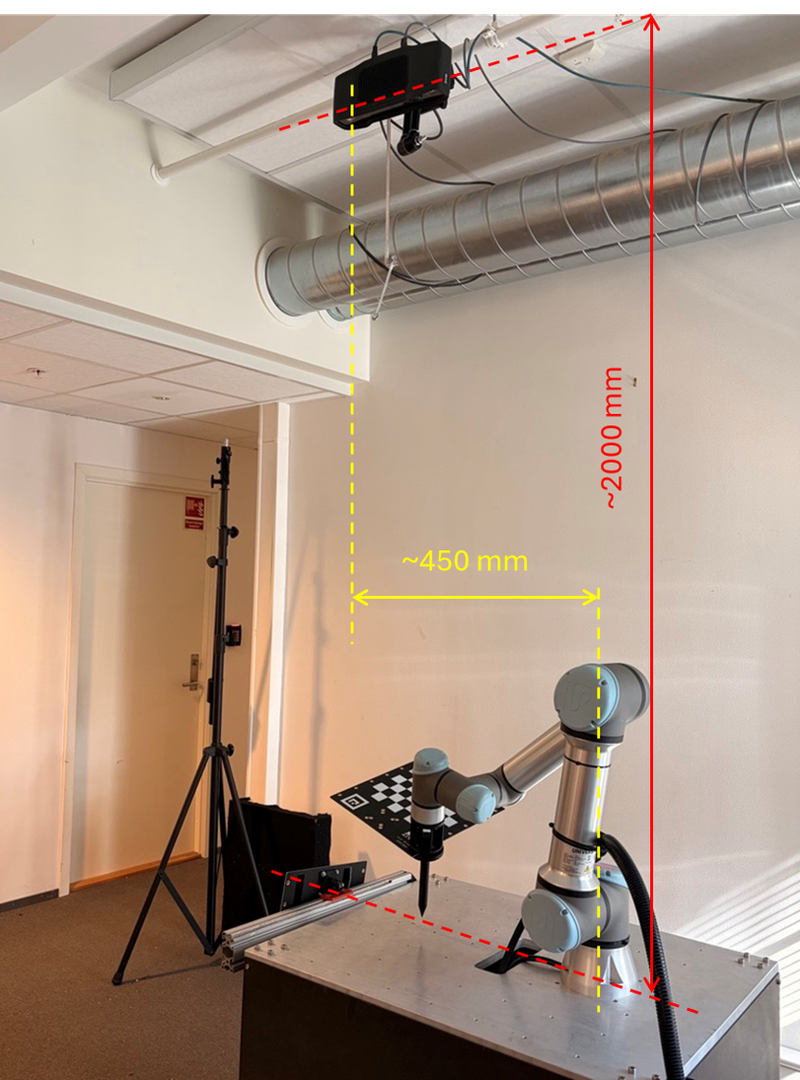
보정 잔차가 예상보다 약간 큽니다.
N (포즈) |
회전 평균 (°) |
최대 회전각(°) |
이동 평균(mm) |
최대 이동 거리(mm) |
|---|---|---|---|---|
16 |
0.24 |
0.79 |
0.68 |
1.48 |
For smaller robots, we expect the residuals to be in the sub-millimeter range, while for larger robots, the residuals can be in the millimeter range. As for the rotational component of the residuals, we expect them to be in the sub-degree range.
전체 잔차
포즈 |
회전 (°) |
이동 (mm) |
|---|---|---|
1 |
0.04 |
0.78 |
2 |
0.74 |
1.46 |
3 |
0.17 |
0.72 |
4 |
0.10 |
0.72 |
5 |
0.15 |
0.51 |
6 |
0.12 |
0.51 |
7 |
0.22 |
0.60 |
8 |
0.11 |
0.26 |
9 |
0.12 |
0.26 |
10 |
0.16 |
0.54 |
11 |
0.27 |
0.91 |
12 |
0.14 |
0.73 |
13 |
0.20 |
0.58 |
14 |
0.79 |
1.48 |
15 |
0.21 |
0.44 |
16 |
0.30 |
0.34 |
Verification by Projection technically succeeds, but the resulting error is still too large to be acceptable. Projection verification error can seem acceptable even if the hand-eye calibration is incorrect, so treat a passing result with caution.
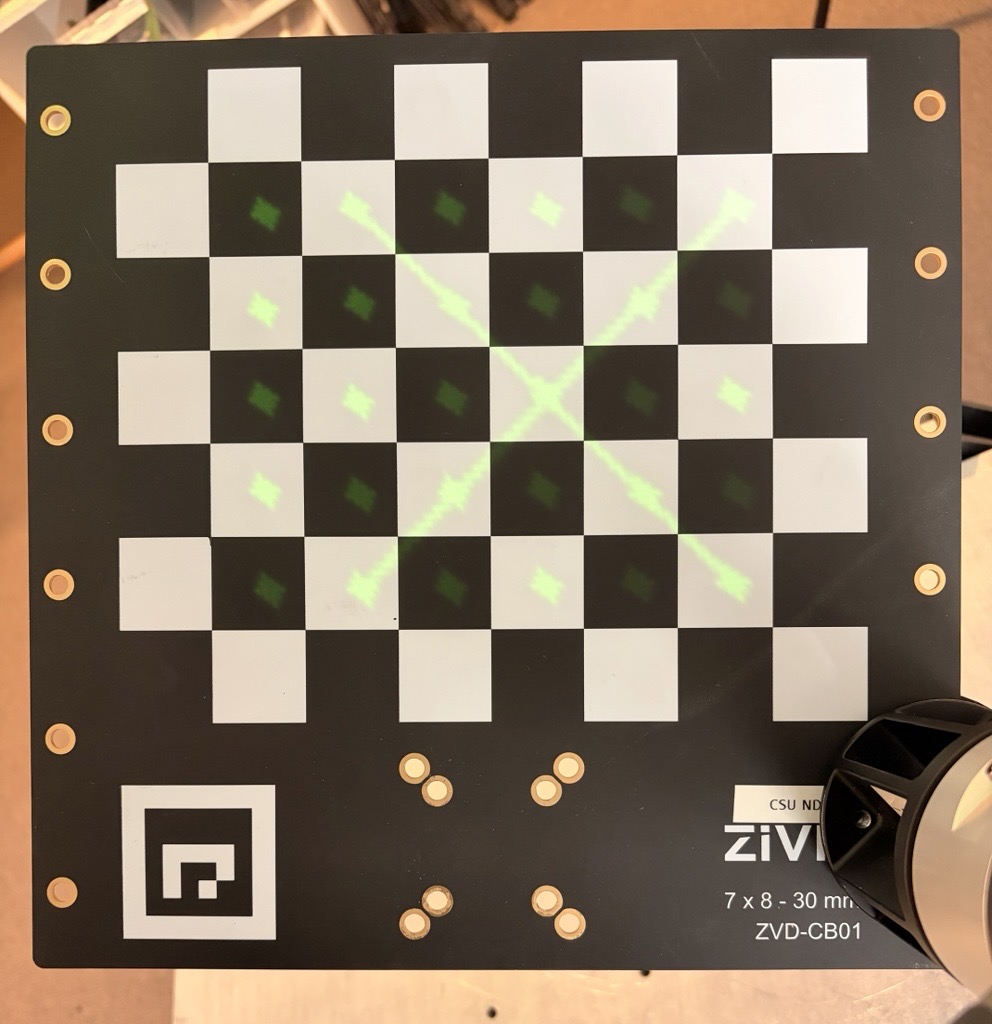
터치 테스트 결과가 만족스럽지 않습니다. 예를 들어, 터치 테스트 도구의 끝부분이 ArUco 마커에 닿지 않습니다.
Potential Cause
높은 잔차의 일반적인 원인 중 하나는 로봇 플랜지와 캘리브레이션 보드를 연결하는 온암 마운팅 구조 또는 캘리브레이션 보드 자체의 휨이나 움직임입니다. 이로 인해 카메라 촬영 중에도 캘리브레이션 보드가 진동하거나, 여러 장의 카메라 촬영에서 보드가 미세하게 어긋날 수 있습니다. 이러한 두 가지 요인 모두 핸드-아이 캘리브레이션 결과의 정확도에 직접적인 영향을 미칩니다.
다음과 같은 경우에 발생할 수 있습니다.
로봇 가속도가 너무 높습니다.
캘리브레이션 보드의 진동이 안정될 시간을 주기에는 캡처 전 지연 시간이 너무 짧습니다.
캘리브레이션 보드을 고정하는 브래킷이 3D 프린팅되었거나, 얇거나, 또는 강성이 충분하지 않습니다.
나사나 고정 장치가 제대로 조여지지 않았습니다.
로봇의 방향이 바뀌면 마운트가 처지거나 휘어지거나 위치가 어긋납니다.
데이터셋 수집 중 발생하는 기계적 움직임은 보정 보드의 자세를 미세하게 다르게 만들어 잔차를 직접적으로 증가시킵니다.
Potential Solution
데이터셋 수집 중 캘리브레이션 보드이 완전히 고정되어 있는지 확인하십시오.
데이터셋 수집 중에는 로봇 가속도를 낮게 유지하십시오.
로봇이 목표 자세에 도달한 후 캡처하기 전에 충분한 지연 시간을 추가하세요.
로봇 플랜지와 캘리브레이션 보드 사이의 장착 인터페이스가 완전히 견고한지 확인하십시오.
견고한 금속 브래킷이나 강성이 높은 다른 재료를 사용하십시오.
3D 프린팅으로 제작된 얇거나 긴 캔틸레버 구조는 피하십시오.
모든 나사, 어댑터 및 연장판이 완전히 조여졌는지 확인하십시오.
필요한 경우 레버 암을 짧게 하거나 마운트를 보강하십시오.
동일한 데이터셋을 사용하여 핸드-아이 캘리브레이션을 반복합니다.
핸드-아이 캘리브레이션 결과 (변환, 잔차, 프로젝션) 를 확인합니다.
Run the touch test (if the hand-eye calibration results are good).
문제 재현 (진동 캘리브레이션 보드)
좋은 데이터셋
아래 이미지에 표시된 데이터 세트를 사용하여 핸드-아이 캘리브레이션이 성공적으로 수행되었습니다.
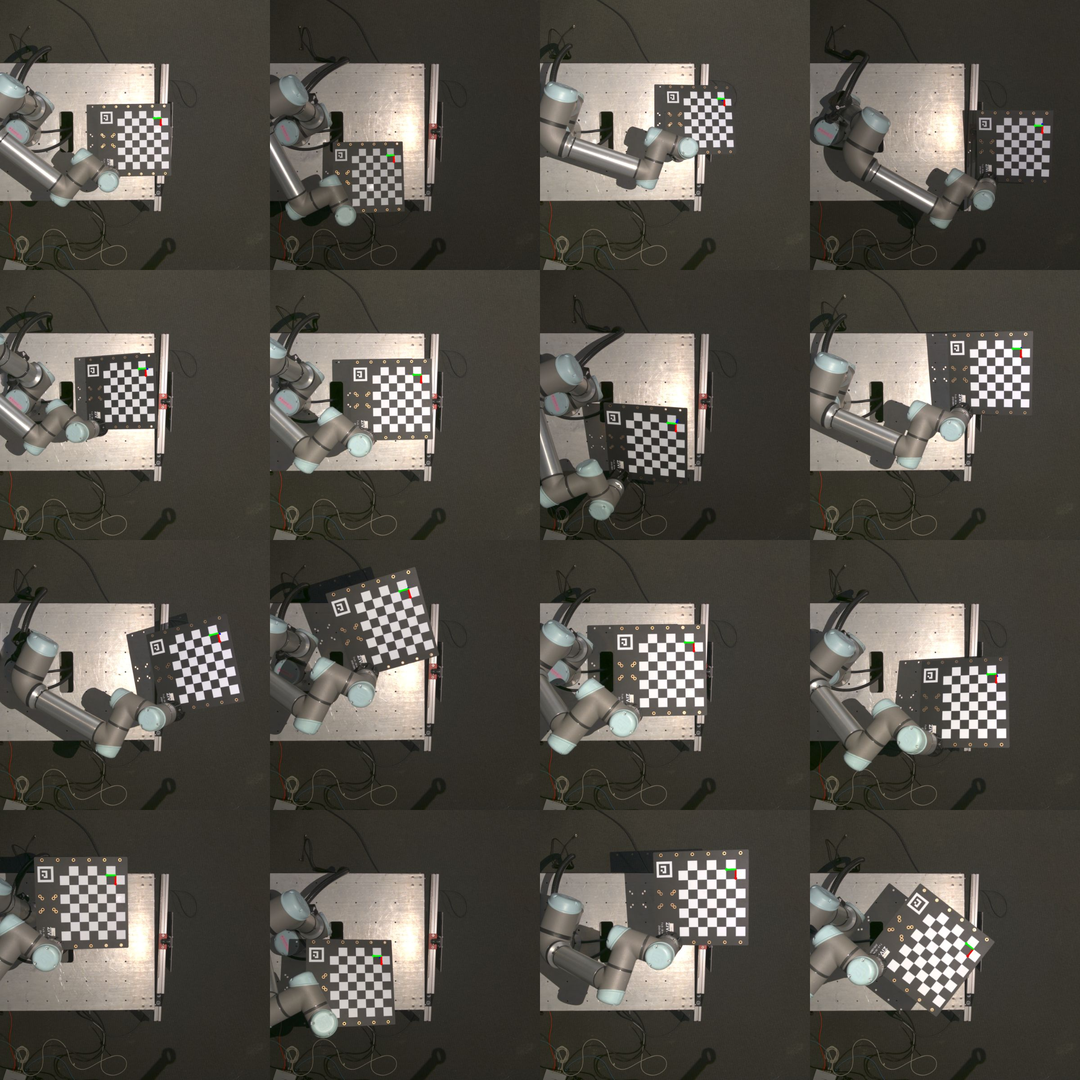
보정 결과는 다음과 같습니다.
0.01 |
1.00 |
0.02 |
-24.28 |
1.00 |
-0.01 |
0.06 |
442.41 |
0.06 |
0.02 |
-1.00 |
1969.45 |
0.00 |
0.00 |
0.00 |
1.00 |
N (포즈) |
회전 평균 (°) |
최대 회전각(°) |
이동 평균(mm) |
최대 이동 거리(mm) |
|---|---|---|---|---|
16 |
0.06 |
0.11 |
0.34 |
0.65 |
전체 잔차
포즈 |
회전 (°) |
이동 (mm) |
|---|---|---|
1 |
0.03 |
0.56 |
2 |
0.06 |
0.65 |
3 |
0.11 |
0.34 |
4 |
0.06 |
0.08 |
5 |
0.05 |
0.64 |
6 |
0.03 |
0.06 |
7 |
0.07 |
0.36 |
8 |
0.06 |
0.18 |
9 |
0.07 |
0.14 |
10 |
0.04 |
0.19 |
11 |
0.05 |
0.29 |
12 |
0.09 |
0.34 |
13 |
0.06 |
0.21 |
14 |
0.07 |
0.33 |
15 |
0.06 |
0.46 |
16 |
0.06 |
0.62 |
프로젝션을 통한 검증이 성공적이었습니다.
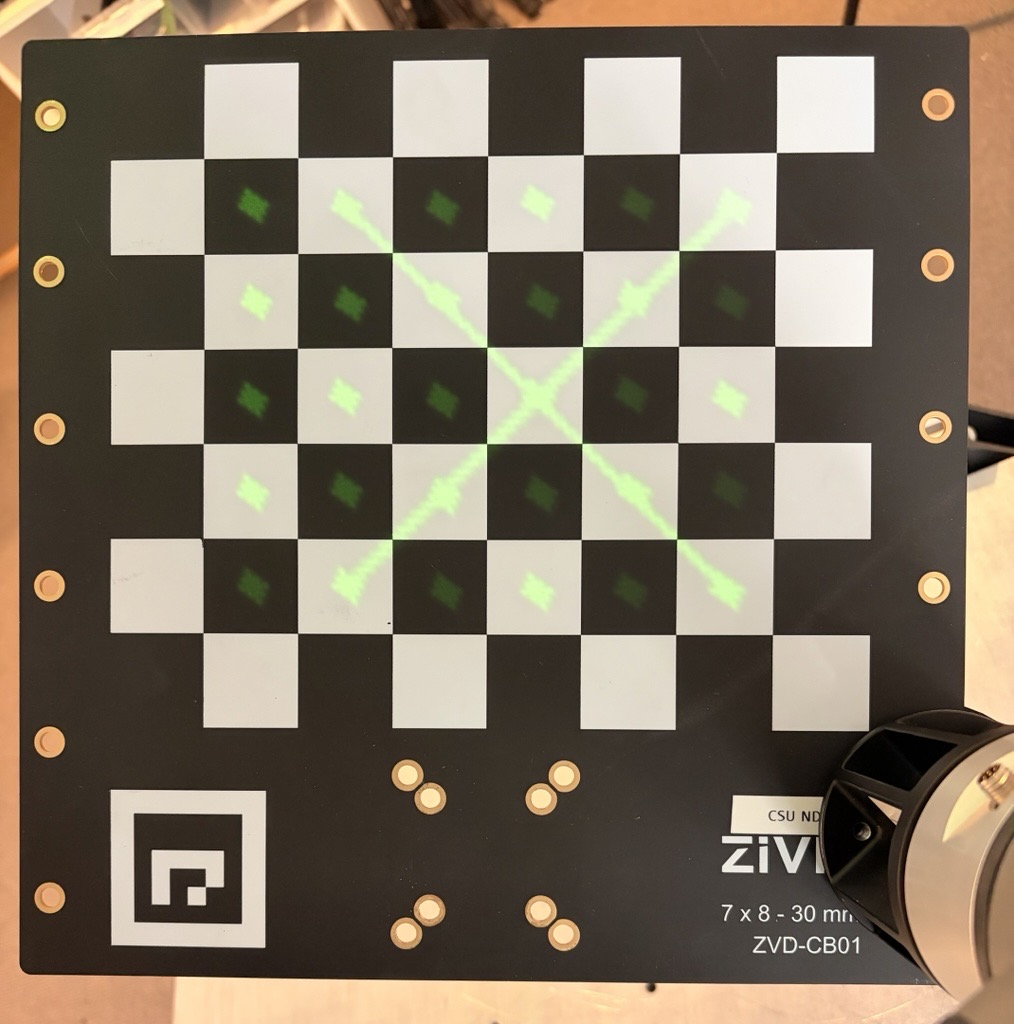
이후 터치 테스트를 통해 핸드-아이 캘리브레이션을 검증했습니다.
터치 테스트가 성공적으로 완료되어 핸드-아이 캘리브레이션이 정확하고 정밀하게 조정되었음을 확인했습니다.
불량 데이터셋 (진동하는 캘리브레이션 보드)
핸드-아이 캘리브레이션에도 동일한 데이터셋을 사용했습니다. 다만, 데이터셋 획득 과정에서 진동하는 캘리브레이션 보드를 모사하기 위해 로봇의 가속도를 의도적으로 증가시켰습니다. 또한, 로봇이 목표 자세에 도달한 후 캡처하기까지의 지연 시간을 의도적으로 단축하여 진동하는 캘리브레이션 보드의 효과를 더욱 유사하게 만들었습니다.
보정 결과는 다음과 같습니다.
0.01 |
1.00 |
0.02 |
-23.06 |
1.00 |
-0.01 |
0.06 |
440.37 |
0.06 |
0.02 |
-1.00 |
1969.85 |
0.00 |
0.00 |
0.00 |
1.00 |
N (포즈) |
회전 평균 (°) |
최대 회전각(°) |
이동 평균(mm) |
최대 이동 거리(mm) |
|---|---|---|---|---|
16 |
0.24 |
0.79 |
0.68 |
1.48 |
전체 잔차
포즈 |
회전 (°) |
이동 (mm) |
|---|---|---|
1 |
0.04 |
0.78 |
2 |
0.74 |
1.46 |
3 |
0.17 |
0.72 |
4 |
0.10 |
0.72 |
5 |
0.15 |
0.51 |
6 |
0.12 |
0.51 |
7 |
0.22 |
0.60 |
8 |
0.11 |
0.26 |
9 |
0.12 |
0.26 |
10 |
0.16 |
0.54 |
11 |
0.27 |
0.91 |
12 |
0.14 |
0.73 |
13 |
0.20 |
0.58 |
14 |
0.79 |
1.48 |
15 |
0.21 |
0.44 |
16 |
0.30 |
0.34 |
Verification by Projection technically succeeded, but the resulting error was still too large to be acceptable. Projection verification error can seem acceptable even if the hand-eye calibration is incorrect, so treat a passing result with caution.
터치 테스트 도구의 끝부분이 ArUco 마커에 닿지 않아 터치 테스트 결과가 만족스럽지 못했습니다.
비교
아래 표에서는 핸드-아이 캘리브레이션 행렬(변환 값)과 핸드-아이 캘리브레이션 잔차 간의 결과를 비교합니다.
데이터셋 |
X (mm) |
Y(mm) |
Z(mm) |
|---|---|---|---|
좋음 (여전히) |
-24.28 |
442.41 |
1969.45 |
나쁨 (진동) |
-23.06 |
440.37 |
1969.85 |
Δ (좋음 - 나쁨) |
-1.22 |
2.04 |
-0.40 |
데이터셋 |
N |
회전 평균 (°) |
최대 회전각(°) |
이동 평균(mm) |
최대 이동 거리(mm) |
|---|---|---|---|---|---|
좋음 (여전히) |
16 |
0.06 |
0.11 |
0.34 |
0.65 |
나쁨 (진동) |
16 |
0.24 |
0.79 |
0.68 |
1.48 |