Unsatisfactory Hand-Eye Calibration Results (Loose or Sagging On-Arm Mount)
Problem
The hand-eye calibration results are unsatisfactory (bad or marginal), looking like something between these combinations:
Hand-Eye Transform |
Hand-Eye Residuals |
Projection Verification |
Touch Test |
|---|---|---|---|
Reasonable |
Bad |
Bad |
Bad |
Reasonable |
Marginal |
Poor |
Bad |
If the on-arm mount is loose or sagging, make the mounting interface rigid and repeat the hand-eye calibration (see Potential Solution below).
Example of marginal hand-eye calibration results
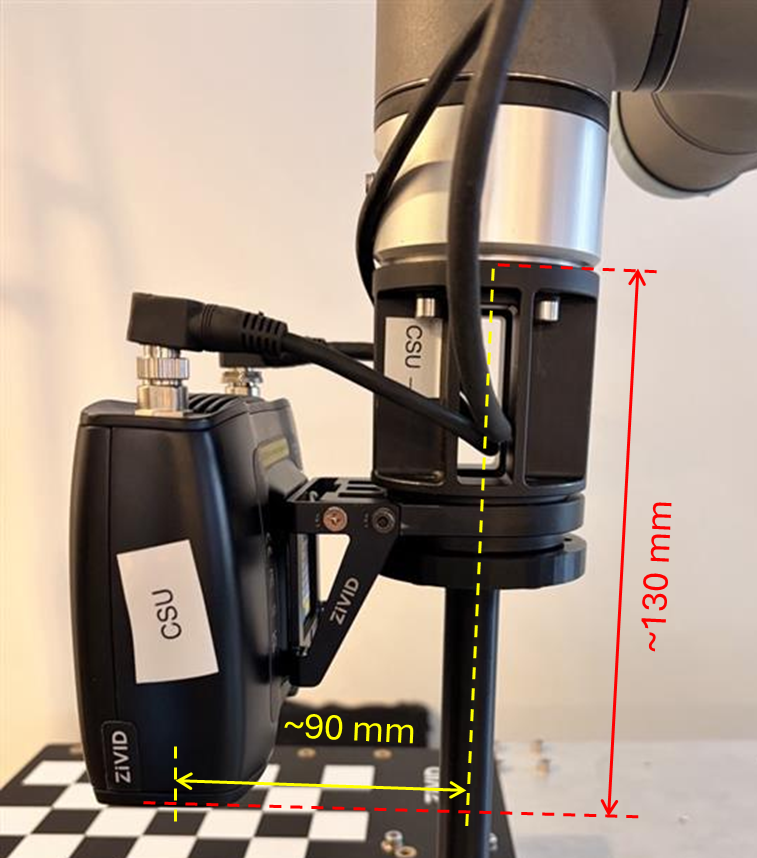
The Hand-Eye Transformation Matrix appears reasonable and is consistent with what one would expect from rough manual measurements (see table and image below).
0.999 |
0.004 |
0.047 |
-54.326 |
-0.004 |
1.000 |
-0.008 |
-86.359 |
-0.047 |
0.007 |
0.999 |
125.236 |
0 |
0 |
0 |
1 |
The calibration residuals are also noticeably larger than expected, roughly an order of magnitude higher.
N (Poses) |
Rot. avg (°) |
Rot. max (°) |
Trans. avg (mm) |
Trans. max (mm) |
|---|---|---|---|---|
14 |
0.756 |
1.545 |
3.162 |
5.944 |
For smaller robots, we expect the residuals to be in the sub-millimeter range, while for larger robots, the residuals can be in the millimeter range. As for the rotational component of the residuals, we expect them to be in the sub-degree range.
Complete Residuals
Pose |
Rotation (°) |
Translation (mm) |
|---|---|---|
1 |
0.449 |
2.486 |
2 |
0.935 |
2.737 |
3 |
0.854 |
4.049 |
4 |
0.753 |
3.035 |
5 |
0.589 |
4.105 |
6 |
0.535 |
2.682 |
7 |
0.593 |
2.973 |
8 |
1.004 |
1.442 |
9 |
0.618 |
3.502 |
10 |
0.614 |
3.648 |
11 |
1.545 |
3.464 |
12 |
0.283 |
1.775 |
13 |
0.773 |
5.944 |
14 |
1.044 |
2.430 |
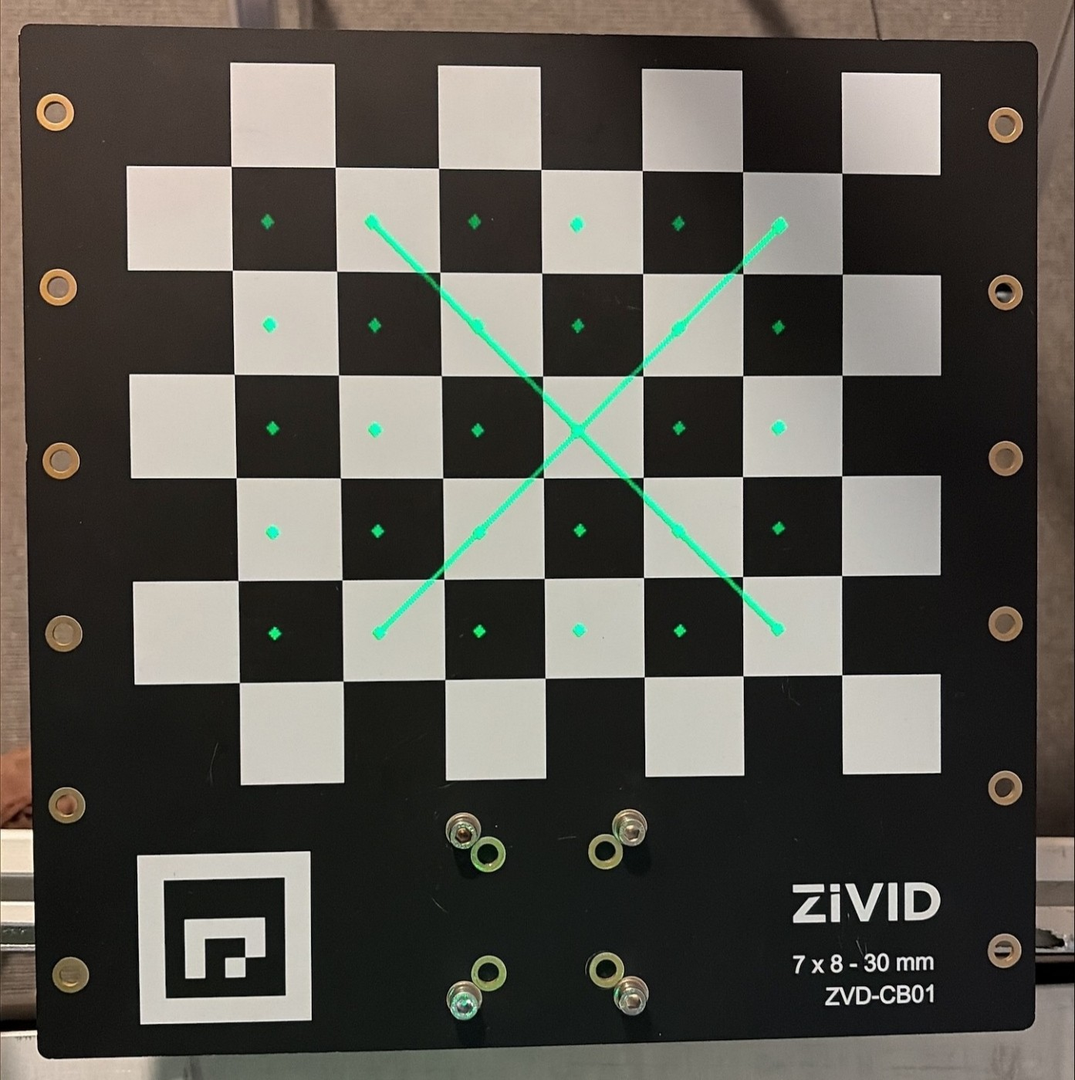
Verification by Projection technically succeeds, but the resulting error is still too large to be acceptable. Projection verification error can seem acceptable even if the hand-eye calibration is incorrect, so treat a passing result with caution.
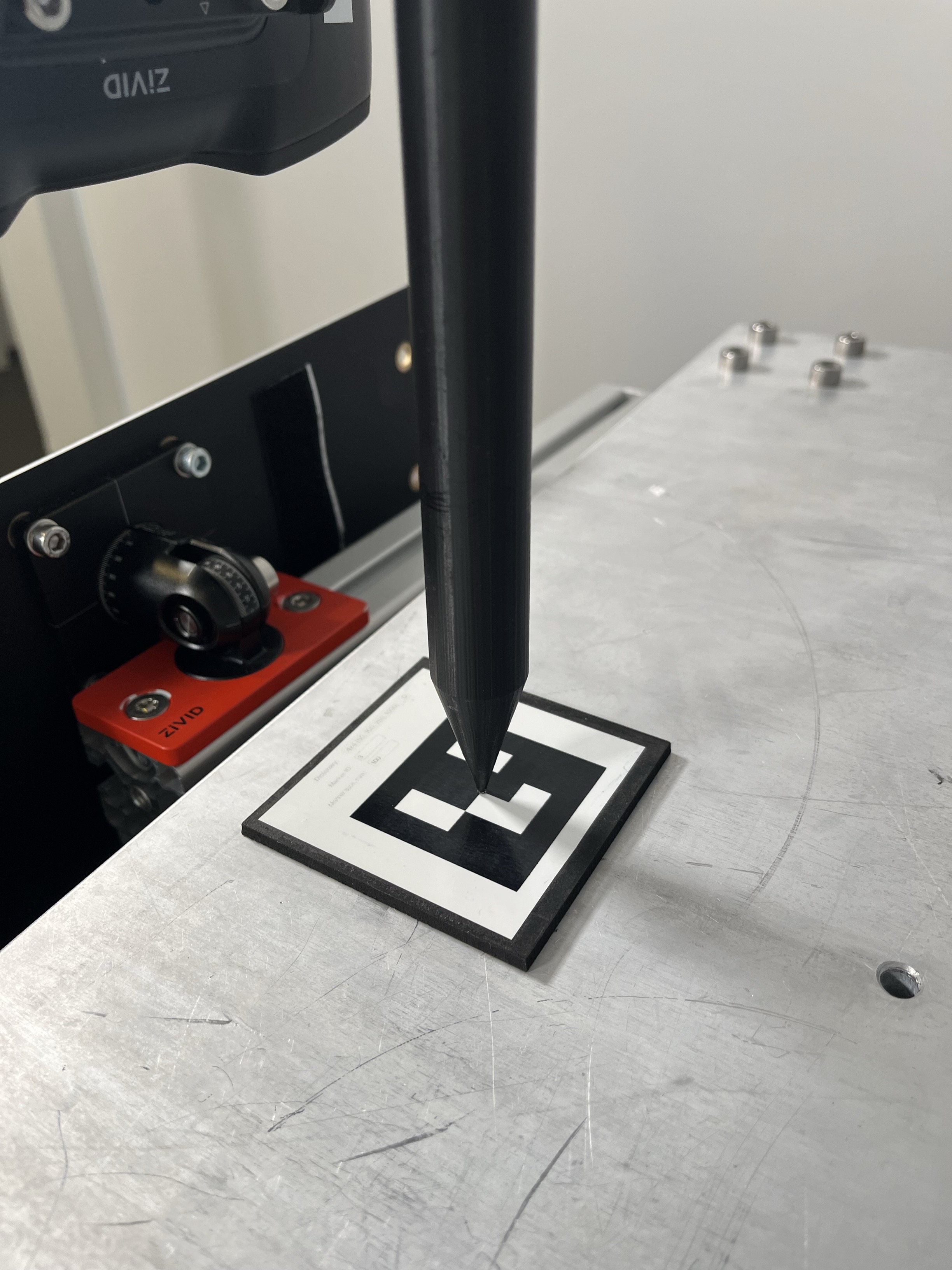
The touch test result is unsatisfactory. For example, the tip of the touch test tool does not reach the ArUco marker.
Potential Cause
A common cause of high residuals is flex or movement in the on-arm mounting structure that connects the robot flange to the camera. This can occur when:
The bracket is 3D-printed, thin, or otherwise insufficiently rigid
Screws or fasteners are not properly tightened
The mount sags, bends, or shifts as the robot changes orientation
The camera’s weight or additional tooling applies torque that the mount cannot withstand
Any mechanical movement during dataset capture results in the calibration board appearing in slightly different poses, which directly increases residuals.
Potential Solution
Ensure that the mounting interface between the robot flange and the camera is completely rigid:
Use a solid metal bracket or another high-stiffness material
Avoid 3D-printed, thin, or long cantilevered designs
Verify that all screws, adapters, and extension plates are fully tightened
Verify that the structure does not deflect under the weight of the camera or end-of-arm-tooling
If necessary, shorten the lever arm or reinforce the mount
Repeat the hand-eye calibration using the same dataset.
Verify the hand-eye calibration results (transform, residuals, projection).
Run the touch test (if the hand-eye calibration results are good).
Reproducing the issue (loose on-arm mount)
Good Dataset
A hand-eye calibration was successfully performed using the dataset shown in the images below.
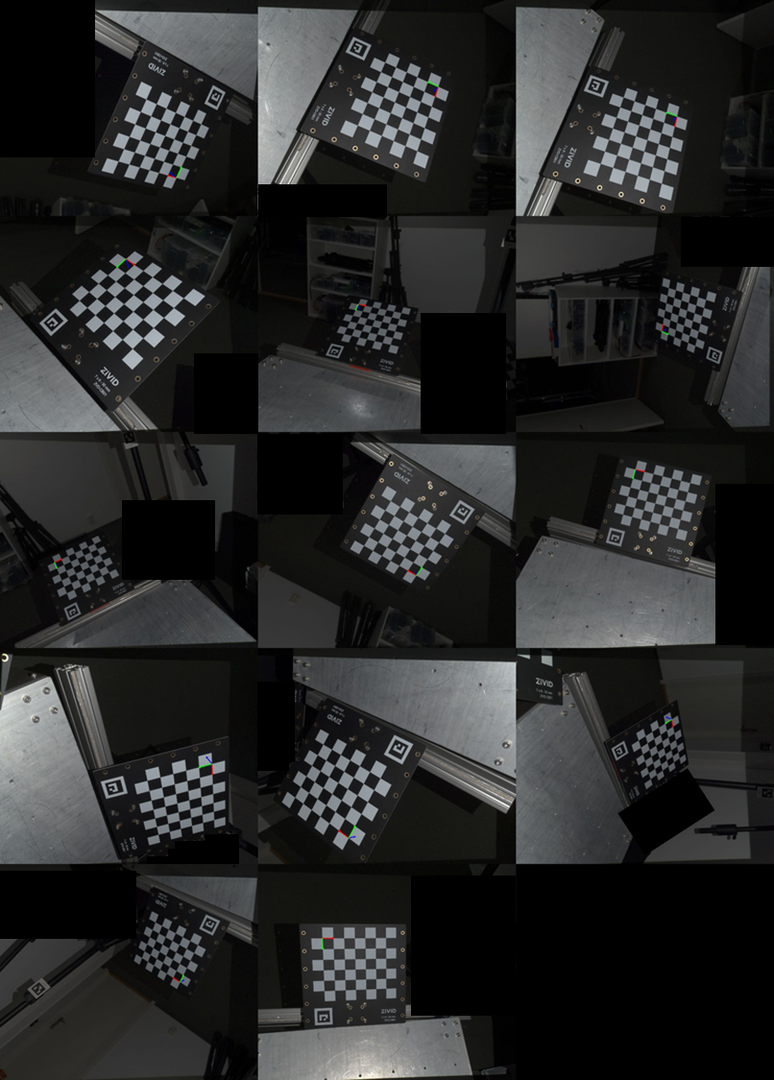
The calibration resulted in the following results:
0.999 |
-0.001 |
0.043 |
-56.355 |
-0.000 |
1.000 |
0.020 |
-89.248 |
-0.043 |
-0.020 |
0.999 |
129.899 |
0 |
0 |
0 |
1 |
N (Poses) |
Rot. avg (°) |
Rot. max (°) |
Trans. avg (mm) |
Trans. max (mm) |
|---|---|---|---|---|
14 |
0.135 |
0.180 |
0.578 |
1.341 |
Complete Residuals
Pose |
Rotation (°) |
Translation (mm) |
|---|---|---|
1 |
0.180 |
0.465 |
2 |
0.122 |
0.449 |
3 |
0.100 |
0.545 |
4 |
0.096 |
0.331 |
5 |
0.126 |
0.356 |
6 |
0.180 |
0.179 |
7 |
0.175 |
1.341 |
8 |
0.136 |
0.621 |
9 |
0.102 |
0.996 |
10 |
0.140 |
0.375 |
11 |
0.135 |
0.763 |
12 |
0.104 |
0.636 |
13 |
0.156 |
0.448 |
14 |
0.141 |
0.588 |
Verification by Projection was successful.
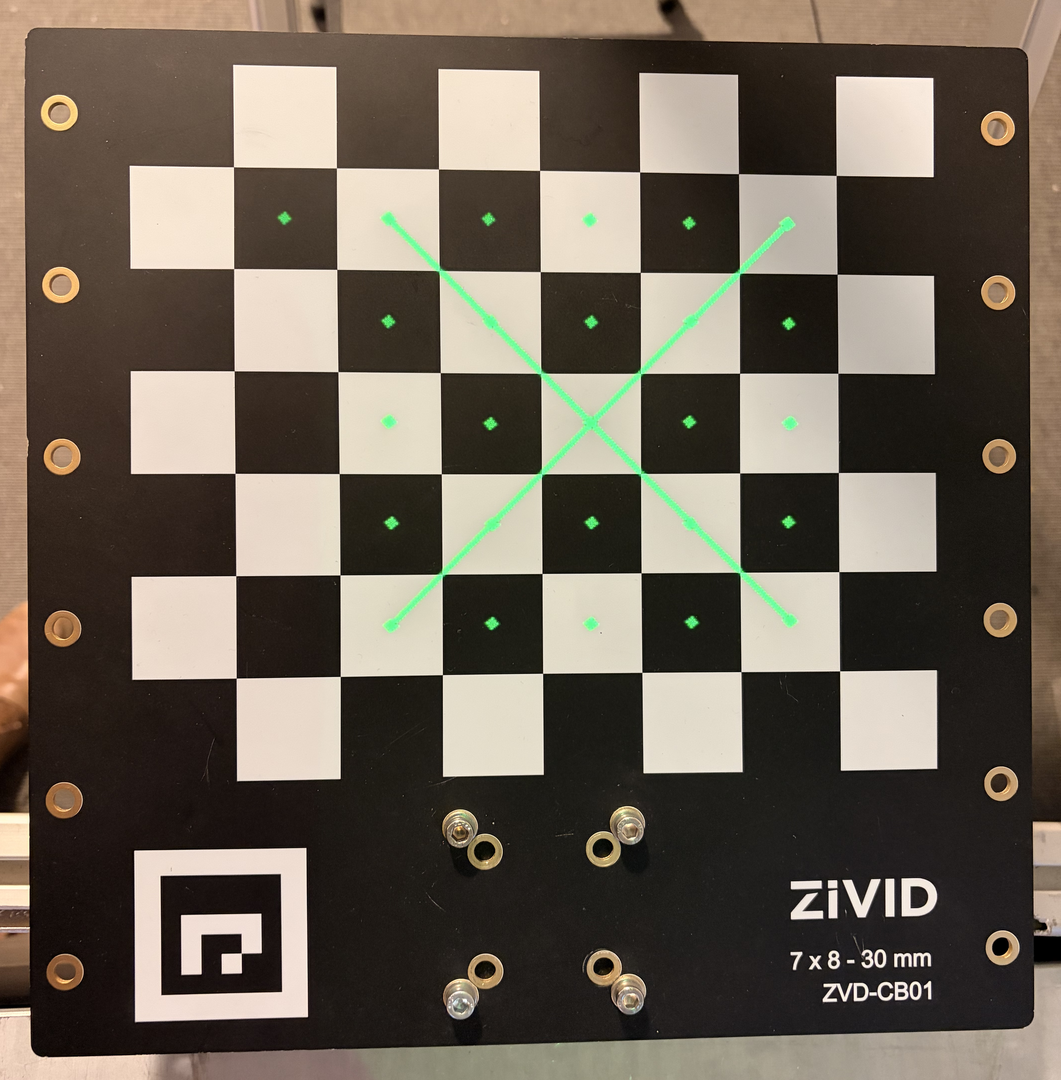
The Hand-Eye calibration was then verified with a touch test.
The touch test was successful, which confirms that the hand-eye calibration is correct and accurate.
Bad Dataset (loose on-arm mount)
The same dataset was used for hand-eye calibration. However, the screws of the camera on-arm mount were intentionally left loose to simulate the issue and demonstrate the effect on hand-eye calibration results.
The calibration resulted in the following results:
0.999 |
0.004 |
0.047 |
-54.326 |
-0.004 |
1.000 |
-0.008 |
-86.359 |
-0.047 |
0.007 |
0.999 |
125.236 |
0 |
0 |
0 |
1 |
N (Poses) |
Rot. avg (°) |
Rot. max (°) |
Trans. avg (mm) |
Trans. max (mm) |
|---|---|---|---|---|
14 |
0.756 |
1.545 |
3.162 |
5.944 |
Complete Residuals
Pose |
Rotation (°) |
Translation (mm) |
|---|---|---|
1 |
0.449 |
2.486 |
2 |
0.935 |
2.737 |
3 |
0.854 |
4.049 |
4 |
0.753 |
3.035 |
5 |
0.589 |
4.105 |
6 |
0.535 |
2.682 |
7 |
0.593 |
2.973 |
8 |
1.004 |
1.442 |
9 |
0.618 |
3.502 |
10 |
0.614 |
3.648 |
11 |
1.545 |
3.464 |
12 |
0.283 |
1.775 |
13 |
0.773 |
5.944 |
14 |
1.044 |
2.430 |
Verification by Projection technically succeeded, but the resulting error was still too large to be acceptable. Projection verification error can seem acceptable even if the hand-eye calibration is incorrect, so treat a passing result with caution.
The touch test result was unsatisfactory as the tip of the touch test tool did not reach the ArUco marker.
Comparisons
The results between hand-eye calibration matrices (translation values) and hand-eye calibration residuals are compared in the tables below.
Dataset |
X (mm) |
Y (mm) |
Z (mm) |
|---|---|---|---|
Good (Tightened) |
-56.355 |
-89.248 |
129.899 |
Bad (Loose) |
-54.326 |
-86.359 |
125.236 |
Δ (Good - Bad) |
-2.029 |
-2.890 |
4.663 |
Dataset |
N |
Rot. avg (°) |
Rot. max (°) |
Trans. avg (mm) |
Trans. max (mm) |
|---|---|---|---|---|---|
Good (Tightened) |
14 |
0.135 |
0.180 |
0.578 |
1.341 |
Bad (Loose) |
14 |
0.756 |
1.545 |
3.162 |
5.944 |