材料的光学特性
介绍
由于光子和物质之间的相互作用,我们才能够看到周围的物质及其颜色和鲜艳度。 当光在空间中传播时,光子与其路径中的粒子相互作用,这可能导致光子改变其路径或转换为另一种形式的能量。 光与物体的相互作用方式取决于材料的化学成分,并可以通过三种特性来描述-镜面反射性,吸收性和透射性。 这些特性的大小在材料内随光波长的变化而变化。
镜面反射
镜子、镀铬的表面和窗户玻璃都是高镜面反射材料。这些材料的共同点是它们的表面纹理非常光滑且纹理精细,经常被描述为反射性的(虽然有些不精确)。橡胶、木材、树叶和粉笔是低镜面反射材料。这些物体的共同点是虽然它们很容易看到,但它们不会产生反射。这些材料表面具有非常分散的纹理,这导致入射光几乎均匀地向各个方向散射。因此,不可能在例如粉笔制成的镜子中看到反射。
透射性
透射性描述了材料的透光能力。比如窗户玻璃,清水,某些塑料和环氧树脂,都是具有高透射率的材料。即使光可能会改变方向,被衍射或折射,它也会穿过材料而不是被反射回去。因此,低透射率的材料会反射光,而您将透过它看到后面的景象。
吸收性
Absorptivity describes a material's ability to absorb an incident photon and convert it to another form of energy, such as heat or electricity. Black objects like rubber tires, coal, TV, and smartphone displays have high absorptivity of visible light and typically get relatively hot when left out in the sun. Objects with low absorptivity will either reflect the light or pass it through, depending on the level of transmissivity (see Transmissivity above). Therefore, materials with low absorptivity include window glass and still water, but also white paper, wood, aluminum, and white chalk. In addition, some materials (colored objects) are partially absorptive.
红色和绿色的苹果对除了红色(700 nm)和绿色(530nm)以外的所有波长的可见光的都具有很强的吸收性。出于这个原因,一些结构光扫描仪,例如使用红色激光源的那些,可以在红色物体上获得非常好的结果,而在蓝色物体上则效果很差,即使物体的形状相同。
镜面反射特性和反射特性的典型影响
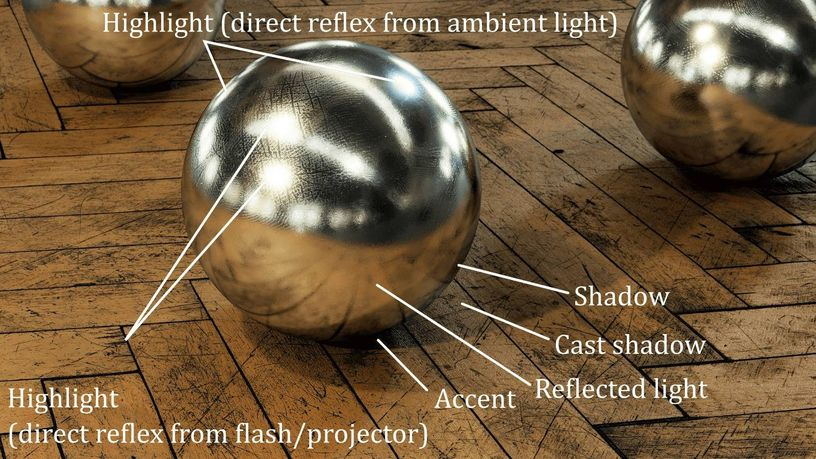
在处理高度镜面反射和反射的材料时,会发生一些光学效应。
由环境或预期光源引起的直接反射的高光。
对象之间的相互反射:
从周围物体反射到物体上。
从物体反射到周围物体上。
由角平面散射的光引起的低光。
下图是显示了其中一些效果如何发生的示例。
综上所述
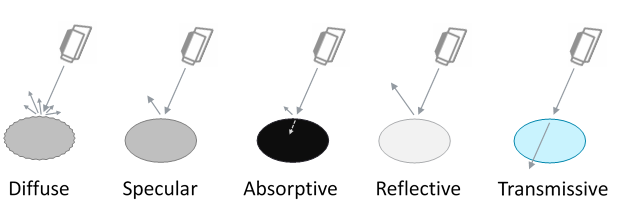
下图概述了上述材料的各种光学特性。左边的两幅图说明了不同级别的镜面反射,而左边的图 3 和 4 展现了不同的吸收率级别。最右边的图则展示了透射性。
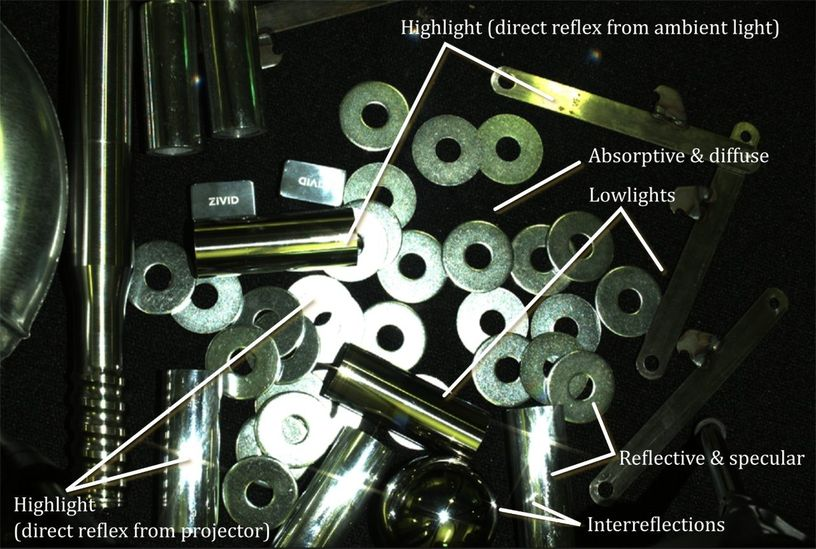
The sum of these optical properties of a material determines how easy or difficult it is to see it and thus how applicable it is for a 3D scanner. Objects and scenes that have low specularity, absorptivity, and transmissivity are preferable for most optical instruments. Increasing the degree of any of the three properties is the fundamental challenge. Many 3D scanners today are struggling to produce satisfactory results on what we typically refer to as transparent and shiny objects. For practical guidance on capturing these materials with a Zivid camera, see 处理高光和闪亮的物体 and 处理透明物体. The figure below shows an example of a challenging scene containing both reflective, specular, and absorptive materials.