Optical Properties of Materials
Introduction
광자와 물질 사이의 상호 작용으로 인해 주변 환경을 모든 색상과 선명도로 볼 수 있습니다. 빛이 공간을 통과할 때 광자는 경로에 있는 입자와 상호 작용하여 광자가 경로를 변경하거나 다른 형태의 에너지로 변환할 수 있습니다. 빛이 물체와 상호 작용하는 방식은 재료의 화학적 구성에 따라 달라지며 반사성, 흡수성 및 투과성이라는 세 가지 속성으로 설명될 수 있습니다. 이러한 특성의 크기는 빛의 파장에 따라 재료 내에서 다양합니다.
Specularity
거울, 크롬 및 창 유리는 반사율이 높은 재료의 예입니다. 이러한 재료는 표면 질감이 매우 매끄럽고 미세한 질감이라는 공통점이 있으며 종종 반사되는 것으로 다소 부정확하지만 설명됩니다. 고무, 나무, 나뭇잎 및 분필은 반사율이 낮은 재료입니다. 이러한 물체는 보기에는 쉽지만 반사되지 않는다는 공통점이 있습니다. 재료 표면은 매우 확산된 텍스처를 가지고 있어 입사광이 모든 방향으로 거의 균일하게 산란됩니다. 따라서, 예를 들어 분필로 만든 거울에서 반사를 보는 것은 불가능합니다.
Transmissivity
투과율은 빛을 통과시키는 물질의 능력을 나타냅니다. 유리창, 맑은 물, 특정 플라스틱 및 에폭시는 투과율이 높은 재료의 예입니다. 빛은 방향을 바꾸거나, 회절되거나 굴절될 수 있지만 원래 있던 곳에서 다시 반사되지 않고 재료를 통과합니다. 따라서 투과율이 낮은 재료는 대신 빛을 반사하므로 빛을 통해 볼 수 없습니다.
Absorptivity
흡수율은 입사 광자를 흡수하여 열이나 전기와 같은 다른 형태의 에너지로 변환하는 물질의 능력을 나타냅니다. 고무 타이어, 석탄, TV 및 스마트폰 디스플레이와 같은 검은 물체는 가시광선 흡수율이 높기 때문에 일반적으로 햇빛에 노출되면 상대적으로 뜨거워집니다. 흡수율이 낮은 물체는 투과율 수준에 따라 빛을 반사하거나 통과시킵니다(위의 Transmissivity 참조). 따라서 흡수율이 낮은 소재에는 창유리와 정제된 물뿐만 아니라 백지, 목재, 알루미늄, 흰 분필도 포함됩니다. 또한 일부 재료(유색 물체)는 부분적으로 흡수됩니다.
빨강 사과와 초록 사과는 각각 빨강(700nm)과 초록(530nm)을 제외한 가시광선의 모든 파장을 잘 흡수합니다. 이러한 이유로 적색 레이저 소스를 사용하는 것과 같은 일부 구조화된 광 스캐너는 적색 물체에서 매우 좋은 결과를 얻을 수 있습니다. 동시에 개체의 모양이 동일하더라도 파란색 개체에 대해 매우 좋지 않은 결과를 얻습니다.
Typical effects of specularity and reflectivity
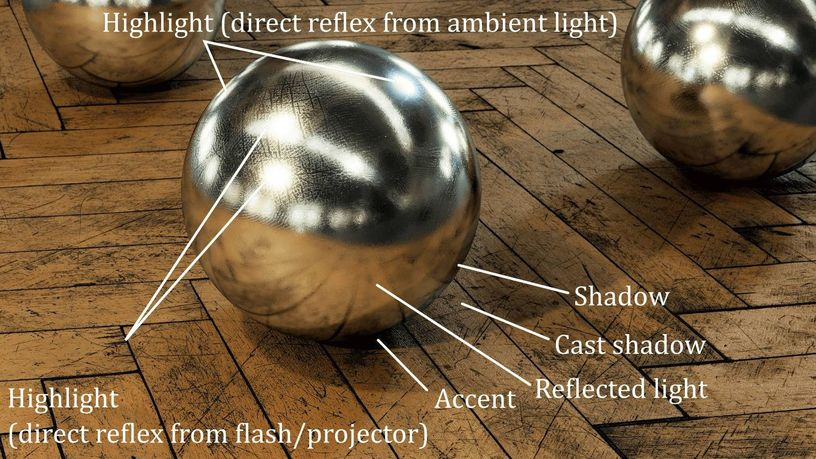
반사율이 높고 반사율이 높은 재료를 다룰 때 몇 가지 광학 효과가 발생합니다.
주변 광원 또는 주사한 광원으로 인한 직접 반사의 하이라이트.
객체 간의 상호 반사:
주변 물체에서 물체로의 반사.
물체에서 주변 물체로의 반사.
빛이 각진 평면에서 산란되어 발생하는 저조도 현상.
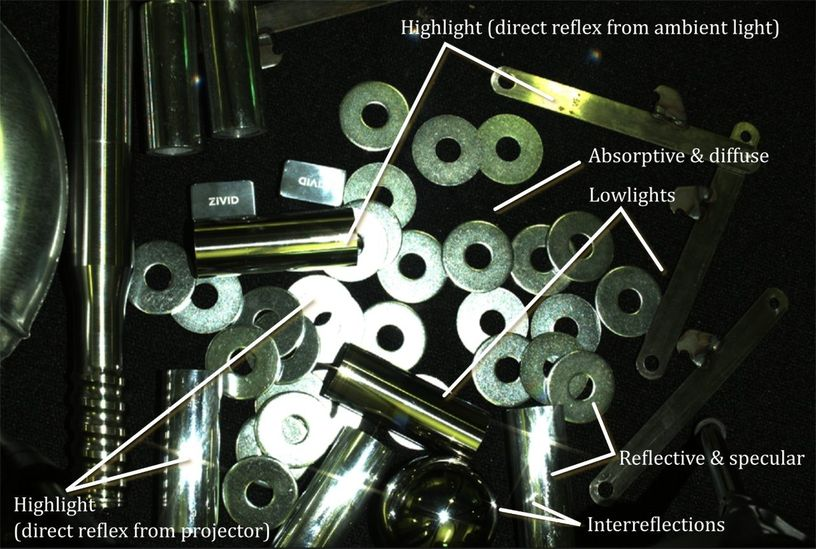
아래 이미지는 이러한 효과 중 일부가 발생하는 방법의 예를 보여줍니다.
Summary
아래 이미지는 위에서 설명한 재료의 다양한 광학 특성에 대한 개요를 보여줍니다. 왼쪽의 두 그림은 서로 다른 반사율 수준을 보여 주는 반면 왼쪽의 그림 3과 4는 다른 흡수 수준을 보여줍니다. 가장 오른쪽 그림은 투과율을 보여줍니다.
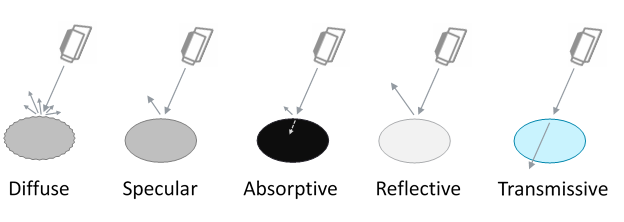
재료의 이러한 광학적 특성의 합은 재료를 보는 것이 얼마나 쉽거나 어려운지, 따라서 3D 스캐너에 얼마나 적용 가능한지를 결정합니다. 반사율, 흡수율, 투과율이 낮은 물체와 장면은 대부분의 광학 기기에 적합합니다. 세 가지 속성 중 어느 하나의 정도를 높이는 것이 근본적인 과제입니다. 오늘날 많은 3D 스캐너는 일반적으로 투명하고 반짝이는 물체라고 하는 것에 만족스러운 결과를 생성하기 위해 고군분투하고 있습니다. Zivid 카메라로 이러한 재료를 캡처하는 것에 대한 실용적인 가이드는 Dealing with Highlights and Shiny Objects 및 Dealing with Transparent Objects 를 참조하세요. 아래 그림은 반사, 정반사 및 흡수 재료를 모두 포함하는 도전적인 장면의 예를 보여줍니다.